
Wood Chimneys & Venting
Safe, Efficient Draft Starts Here
A wood-burning system is only as good as its chimney.
Built for proper draft, safety, and long-term performance.
Designed to work with your home—not against it—so your fire burns clean and performs as it should.
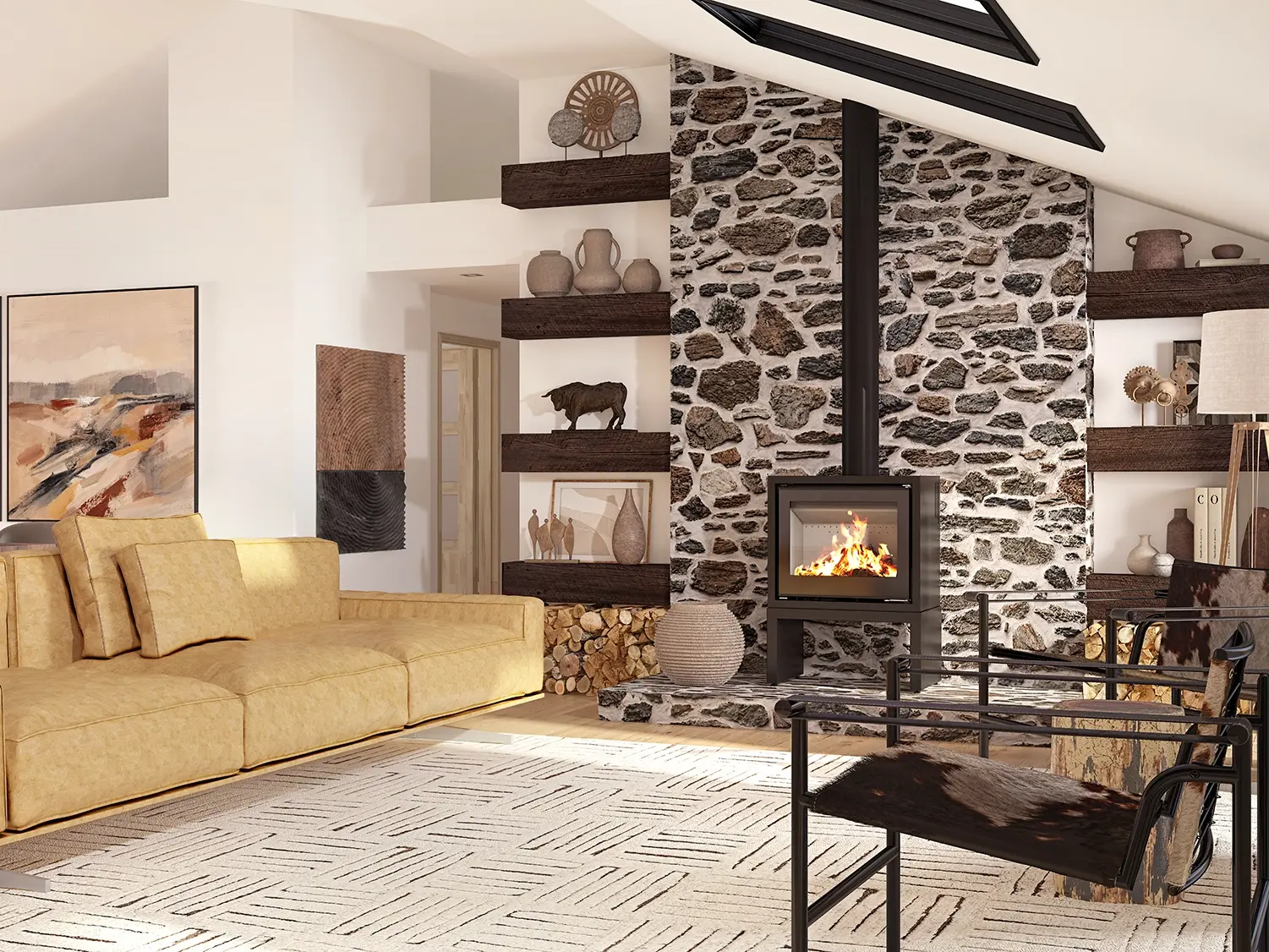
Understanding the Basics
What is a Chimney?
A chimney is the insulated venting system that safely carries smoke, gases, and heat from your appliance to the outdoors. It maintains proper draft and protects your home from heat transfer.
What is Stove Pipe?
Stove pipe (also called connector pipe) is the interior section that connects your wood stove to the chimney.
- Runs inside the room
- Not insulated like chimney
- Designed to radiate some heat back into your space
Think of it like this:
Stove pipe connects. Chimney protects.
Not sure what your setup needs?
→ See what to bring
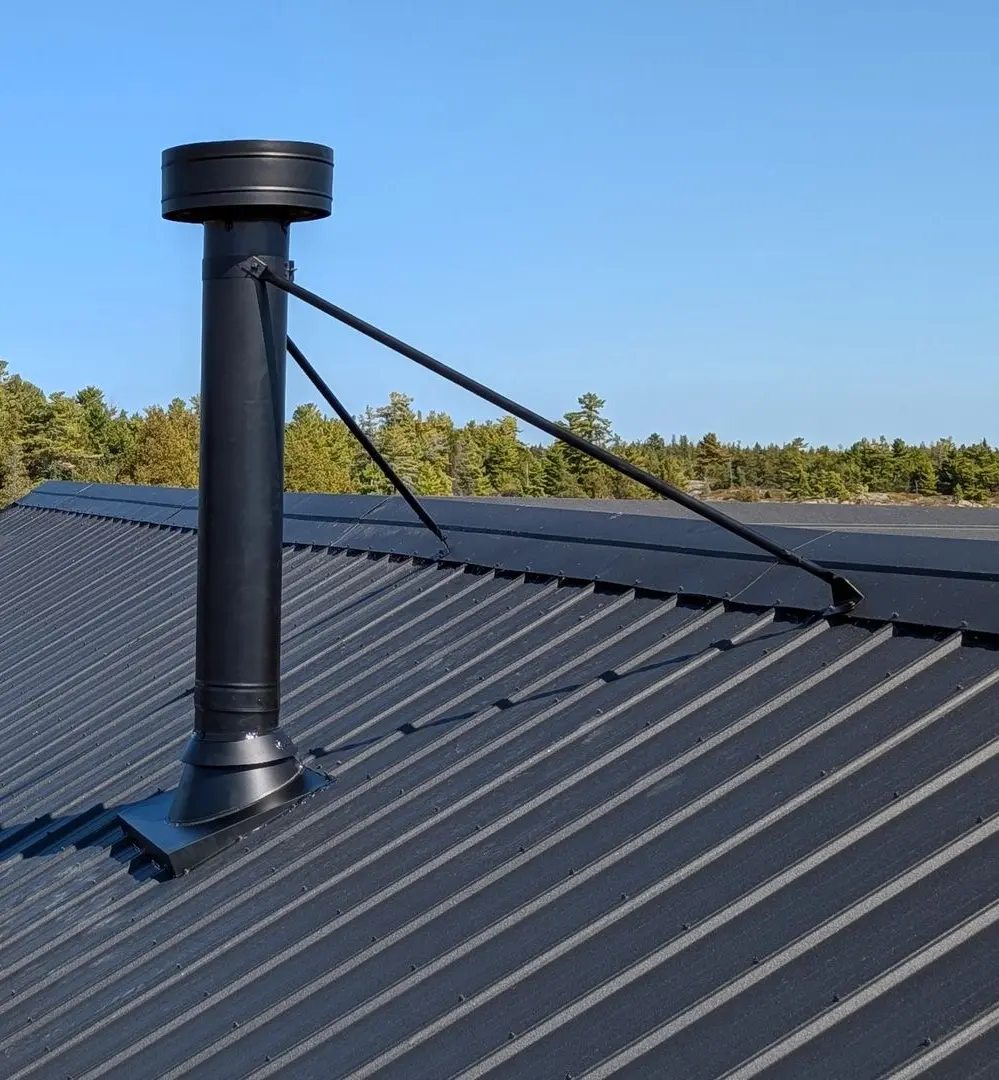
How Chimney Systems Are Installed
Every home is different, but most wood chimney systems follow a few proven paths:
Common Install Styles
Through the Roof (“Straight Up”)
- Runs vertically through the home and exits the roof
- Best for draft and performance
- Clean, efficient, and preferred whenever possible
Through the Wall (“Out and Up”)
- Exits horizontally, then runs vertically outside
- Used when interior routing isn’t possible
Every home is different—we’ll help you choose the right setup.
→ Plan your visit
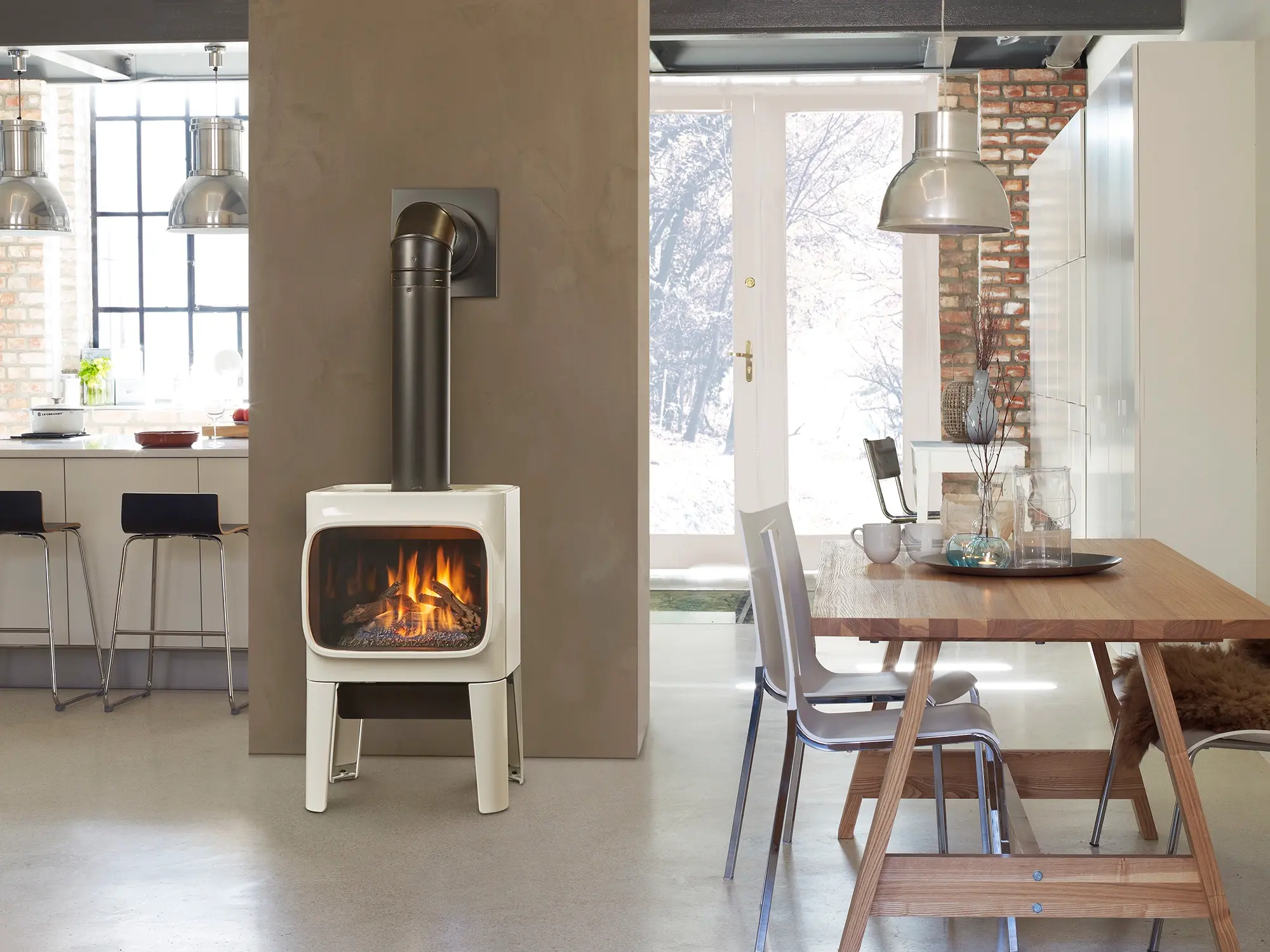
Other Venting Systems
Different fuel types require different venting systems.
Pellet Venting
Pellet appliances use mechanical exhaust, so venting design and requirements differ from wood systems.
Gas Venting
Gas appliances require certified installation and specialized venting systems to ensure safe operation and code compliance.
If you’re unsure what your setup requires, we’ll guide you through the right approach.
Why Interior Chimneys Perform Better
You may hear the phrase “outside chimneys are cold chimneys.”
And cold chimneys don’t draft well.
When a chimney runs inside the home:
- It stays warmer
- Creates stronger, more consistent draft
- Reduces smoke rollout and startup issues
Exterior chimneys, on the other hand:
- Cool down quickly
- Can struggle with draft, especially in colder climates
- May lead to more creosote buildup
When we design your system, we always aim for the most reliable, high-performing route first—not just the easiest one.
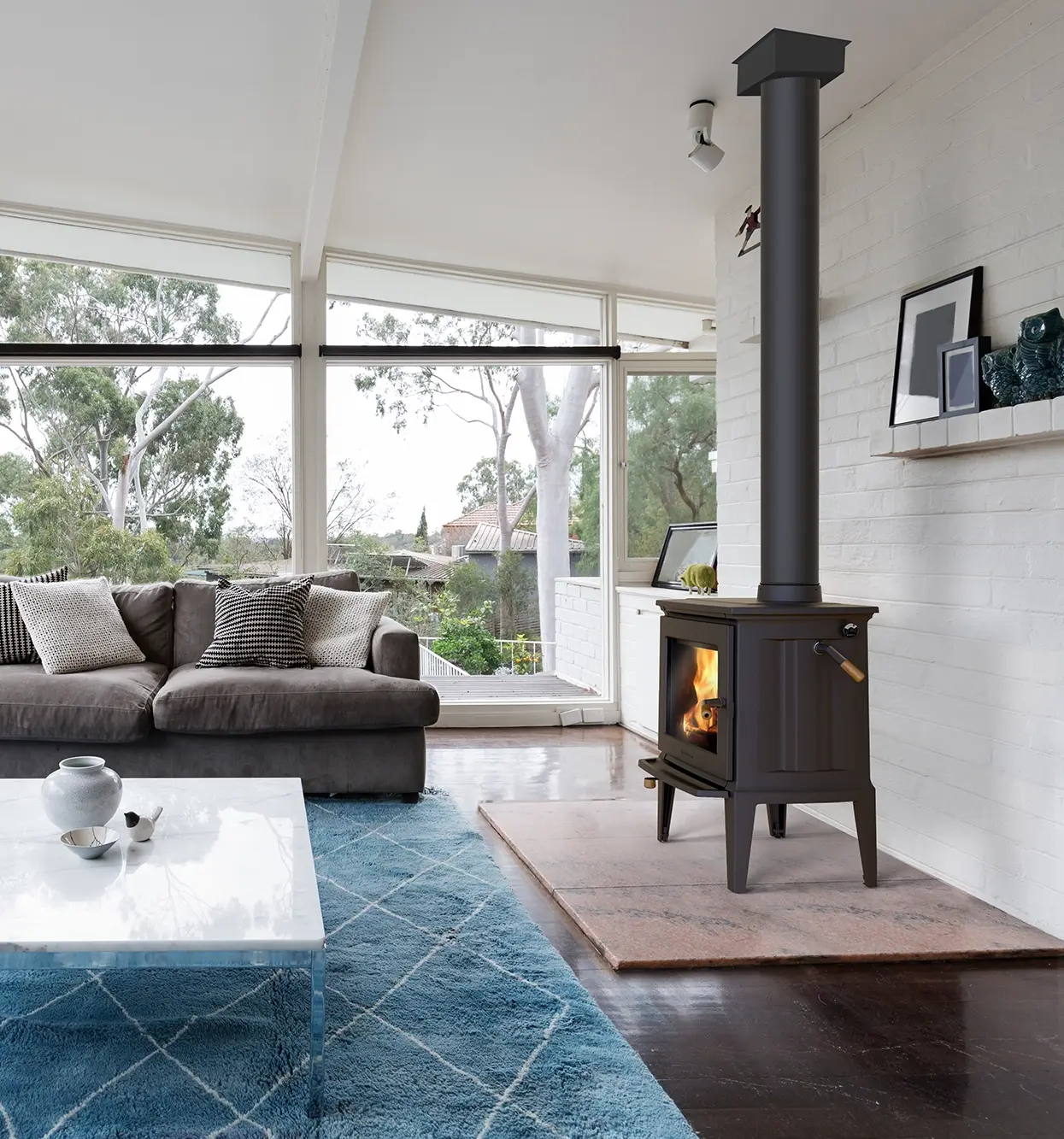
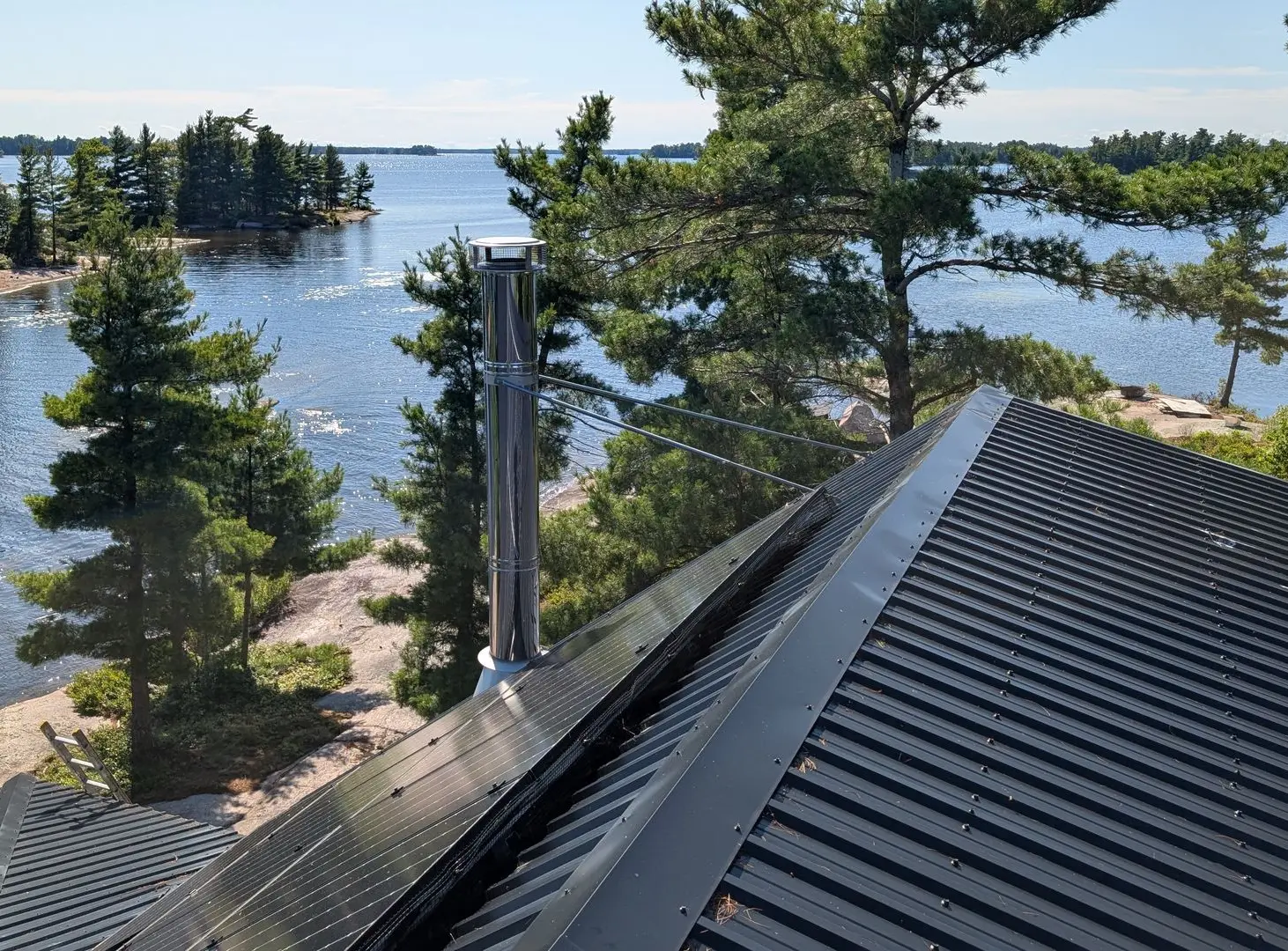
Chimney Sizes & What They Mean
For most wood stoves:
- 6” diameter → Standard for the majority of installations
- Larger fireplaces → May require 7” or 8” systems
Proper sizing is critical. Too large or too small, and your system won’t draft correctly.
We always match:
- Appliance requirements
- Flue collar size
- Installation configuration
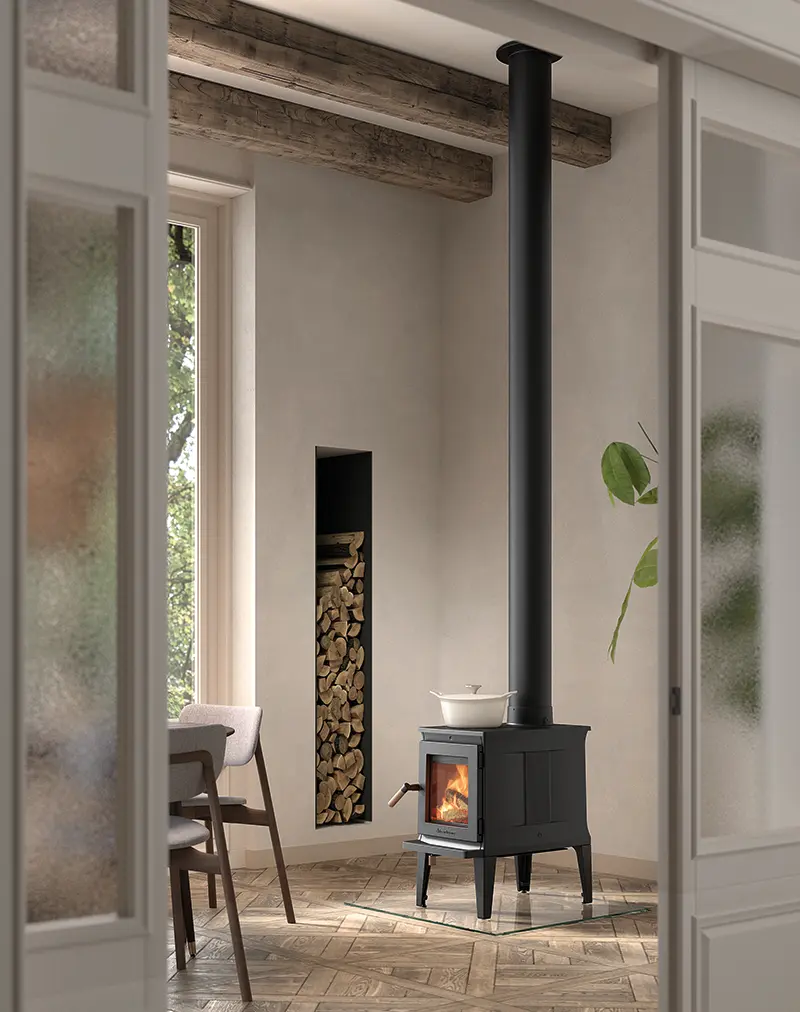
Stove Pipe Options:
Single Wall vs Double Wall
Inside your home, you’ll typically choose between:
Single Wall Stove Pipe
- More affordable
- Radiates more heat into the room
- Requires greater clearances to combustibles
Double Wall Stove Pipe
- Better draft performance
- Reduced clearance requirements
- Cleaner, more refined appearance
- Ideal for tighter spaces or modern installs
Stainless Steel & Sauna Applications
For sauna stoves and certain installations, stainless steel venting is often preferred:
- Better resistance to high heat and moisture
- Long-term durability in demanding environments
- Clean, minimal aesthetic that suits sauna design
Think of it like this:
Stove pipe connects. Chimney protects.
The Excel Advantage
ICC’s Excel chimney system is built for reliable draft, long-term durability, and clean, efficient installation.
High Performance
Dense insulation maintains
strong, consistent draft.
Built to Last
Heavy-duty stainless steel
for long-term durability.
Low-Profile Design
Smaller outer diameter for
tighter, cleaner installs.
Precision Fit
Consistent fit for
dependable installation.
Lifetime Warranty
Limited lifetime coverage
for long-term confidence.
We proudly carry ICC Chimney (Industrial Chimney Company)—a trusted Canadian manufacturer known for quality and reliability.
Our Approach to
Chimney Design
Assess Your Space
We take the time to understand your home, layout, and appliance requirements from the start.
Designed for You
We recommend a chimney configuration that performs reliably and fits your home properly.
Verify On-Site
We confirm key details through a technical site visit to ensure everything is safe and code-compliant.
Install With Care
Our experienced installers complete the work with precision, respect, and attention to detail.
Ongoing Support
We’re here to support your system long after installation—so it continues to perform as it should.
The result? Reliable performance, safety, and complete peace of mind.
Your Chimney System
Right from the Start
Your chimney system impacts everything—draft, safety, and long-term performance.
We’ll help you plan the right setup for your home, your appliance, and how you live.
Bring your measurements, photos, or questions—we’ll take it from there.
What to Bring When You Visit Us
The more we understand your space, the better we can guide you.
*Even a few quick phone photos can help us give you clear, accurate recommendations right away.
Measurements
Floor to ceiling height (main level)
Ceiling to roof height (attic space)
Roof Detail
Roof pitch (if known)
Roofing material (shingle or metal)
Photos*
Room where the appliance will be installed (wide angle)
Exterior of the home (ground to roofline)
Street view showing where chimney will exit
Let’s Design Your Chimney System
Not sure where to start? That’s exactly what we’re here for.
Bring your measurements, photos, and questions—and we’ll help you build a system you can trust.
Need a Stove with that?
View some of our wood-fired options